
Blog
The Towel Production Process: From Yarn to Weaving, Dyeing and Finishing

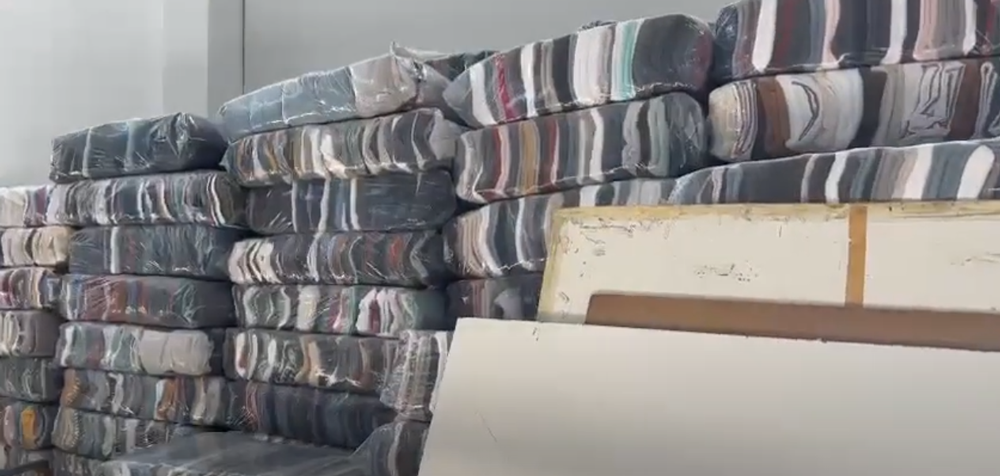
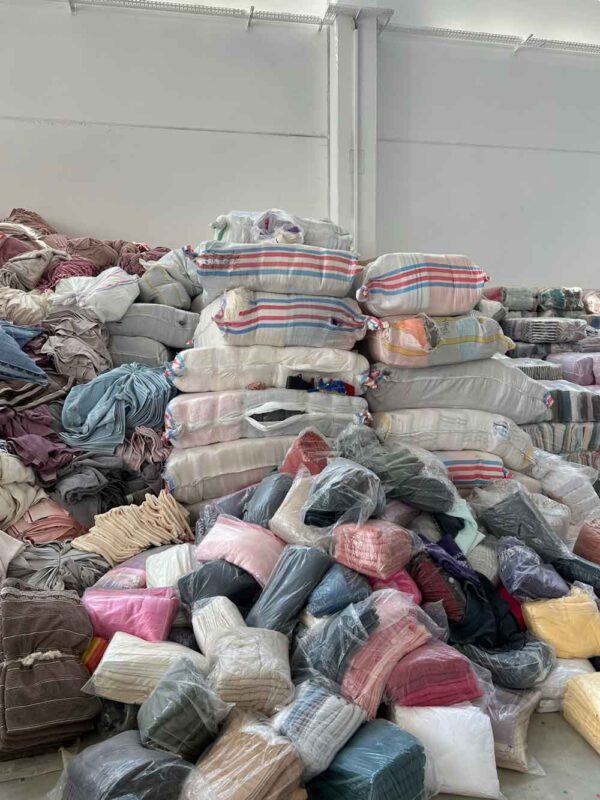
The production of a towel involves more than just weaving the fabric. From the selection of the yarn to the weaving process, from dyeing to finishing, and from cutting to sewing and packaging, each stage has a direct impact on the quality of the product.
Particularly for businesses that purchase products for hotels, spas, Turkish baths, e-commerce, retail and textile wholesaling, Understanding the towel production process, enables a more accurate comparison of price and quality.
When assessing a wholesale towel order, consideration should be given not only to the product’s appearance but also to technical details such as the yarn structure, GSM, weave density, dye quality, absorbency, shrinkage rate and stitch strength.
How Are Towels Made?
Towel production generally consists of the following basic stages:
- Selection of raw materials and yarns
- Preparing the warp
- Weaving
- Painting
- Washing and finishing
- Drying
- Cut
- Clothing and sewing
- Quality control
- Labelling and packaging
Depending on the product’s characteristics, additional processes may also be applied to these procedures.
1. Yarn Selection in Towel Production
The main raw material used in towel production is yarn.
The quality of the yarn determines the quality of the towel:
- Its softness
- Water absorption
- Its durability
- Washing performance
- Its appearance
- Service life
may have a direct impact.
Cotton Yarn
In the production of towels One of the most commonly used raw materials is cotton.
The natural absorbency of cotton fibres makes them ideal for use in towels.
However, not all cotton yarns are the same.
The thread:
- Fibre length
- Spinning method
- Yarn count
- Twist level
- Scanning process
may affect product performance.
What is combed cotton?
During the carding process, short fibres and certain foreign matter are removed.
This makes it possible to produce a smoother and more uniform yarn.
Combed cotton yarns are particularly suitable for high-quality towels and home textiles.
Is open-end yarn used?
Open-end yarn is one of the cost-effective production options.
Depending on the product’s intended use and target price segment, different types of yarn may be chosen.
The important thing here is that the yarn to be used is compatible with the desired quality of the towel.
2. The Warp Preparation Process for Towels
Before the weaving process begins, the yarns must be prepared in a manner suitable for the weaving machine.
The warp is the system of threads running the length of the fabric.
The warp structure is very important in towel production because it determines the towel’s:
- Its strength
- Weave pattern
- Stitch formation
- Its dimensional stability
may affect.
More Than One Warp Can Be Used in Towel Weaving
In towel fabrics, different yarn systems are generally used to create the ground weave and the pile surface.
The towel’s characteristic soft, looped surface is the result of this special weaving technique.
3. The Towel Weaving Process
Weaving is one of the most important stages in towel production.
The feature that distinguishes a towel from many other fabrics is the looped structure on its surface.
These loops create a large surface area, enabling the towel to absorb water.
What is a Towel Stitch?
The small loops of thread visible on the surface of a towel are called ‘loops’.
These stitches form the:
- Its absorbency
- Its softness
- Its volume
- Its appearance
effects.
The pile density and yarn quality play a significant role in how the towel feels to the touch.
Double-Sided Towel Weaving
Many classic towels have loops on both sides.
This design can improve the towel’s water-absorption capacity and comfort of use.
Why is the Weave Density of a Towel Important?
The weave density can affect the surface texture and durability of the towel.
A very rare structure:
- Lower density
- A less firm feel
- Lower durability
can create.
However, an excessively dense structure can also make the product unnecessarily heavy.
For this reason, a balanced weave structure should be chosen depending on the product’s intended use.
4. How is the weight per square metre of a towel determined?
The GSM value of a towel is related to the amount of yarn used during production and the weave density.
GSM, grams per square metre means.
For example:
- 400 GSM
- 500 GSM
- 600 GSM
Each towel may have a different thickness and weight.
What Does GSM Affect in Production?
As the GSM value increases, generally:
- The weight of the product increases.
- The towel feels plumper.
- Absorption may increase.
- The drying time may be longer.
- Logistics costs may rise.
For this reason, in professional settings such as hotels and spas, it is not just a matter of high GSM, but of choosing the right GSM.
5. The Dyeing Process for Unbleached Towel Fabric
The fabric or product obtained after weaving may not yet be ready for the end user.
The dyeing process is one of the key stages in towel production.
How Do You Dye a Towel?
Different dyeing methods can be applied depending on the towel production process.
Generally speaking, in the textile dyeing process:
- The fabric is placed in the dye bath.
- The process is carried out under specified temperature and chemical conditions.
- This ensures that the colour binds to the fibres.
- Rinsing and washing are carried out.
The quality of the paintwork is important in ensuring that the product retains its appearance over time.
What Is Colour Fastness in Towels?
Colour fastness of the towel:
- Washing
- Friction
- Water
- Sweat
- Usage
It indicates how well it retains its colour over time.
Colour fastness is particularly important for hotels, spa centres and corporate businesses.
Because the items can be washed very frequently.
Can you dye white towels?
Classic dyeing techniques may not be suitable for white towels, as they are for coloured items.
However, various bleaching and finishing processes may be carried out to achieve the desired level of whiteness.
It is important that these processes are carried out correctly to ensure that the product’s fibre structure is not unnecessarily damaged.
6. Towel Washing and Finishing Processes
Following dyeing or bleaching, the product may undergo various finishing processes.
The finishing processes for the towel:
- Its softness
- Its absorbency
- Its appearance
- Tensile performance
- The sense of touch
It can be applied for the purpose of improvement.
Why Is Emicity Related to the Process of Socialisation?
Some of the substances used in the manufacturing process may leave residues on the fabric.
Appropriate washing and finishing processes can help cotton fibres absorb water more effectively.
For this reason, the fact that a towel is thick does not necessarily mean it is highly absorbent.
7. Drying the Towel
After washing and dyeing, the product must be dried under controlled conditions.
During the drying stage:
- Temperature
- Duration
- Humidity
- Mechanical motion
may affect the final structure of the product.
Why Can Over-Drying Be a Problem?
Extreme heat or prolonged drying times can cause the following in some textile products:
- Hardness
- Fibre damage
- Over-withdrawal
- Energy consumption
may lead to problems such as these.
For this reason, controlled processes are important in industrial production.
8. The Towel Cutting Process
Once the weaving and finishing processes have been completed, the towel fabric is cut to the specified dimensions.
For example:
- 30×50 cm
- 50×90 cm
- 70 × 140 cm
- 90×150 cm
- 100 × 150 cm
Products in different sizes, such as these, can be produced.
What is a dimensional tolerance?
Minor dimensional variations, measured in millimetres or smaller, may occur in textile products following production.
For this reason, it is important to specify in advance the dimensional tolerances accepted, particularly for B2B orders.
9. Towel Manufacturing and Sewing
After cutting, the edges and relevant sections of the product are sewn together.
This stage garment manufacturing process is known as.
One of the most important factors affecting the lifespan of a towel is the quality of the stitching.
Why is edge stitching important?
Towels can be subjected to industrial washing dozens of times, particularly in hotels and spas.
Poor-quality seams will, over time:
- It can be opened.
- It can be removed.
- He might lose his form.
For this reason, the quality of the stitching must always be checked on bulk orders.
What is a border on a towel?
Some towels feature decorative areas with a different weave pattern along the edges or at the bottom.
These sections are known as borders.
Border:
- Design
- Brand identity
- Embroidery area
- Decorative feature
can be used for this purpose.
10. How to Embroider a Logo onto a Towel?
Hotels, spas, gyms and corporate businesses can have their own logos printed on the products when placing bulk towel orders.
Embroidery Process
The logo is converted into a file suitable for the embroidery machine using computer software.
Subsequently determined:
- Yarn colour
- Logo size
- Settlement area
The embroidery is applied to the towel.
Does Logo Embroidery Affect Product Costs?
Yes.
The cost of embroidery is usually:
- The size of the logo
- Number of stitches
- Number of colours
- Order quantity
depends on factors such as these.
11. How is Towel Quality Control Carried Out?
One of the final stages of production is quality control.
Various criteria may be examined during professional quality control.
Visual Inspection
In the product:
- Stain
- Yarn drawing
- Weaving fault
- Sewing problem
- Colour difference
It is checked whether this is the case.
Dimension Check
The product is checked to ensure it complies with the order specifications.
Weight Management
The product can be checked to ensure it complies with the specified GSM and unit weight.
Stitch Inspection
The edge and border seams are checked.
12. Packing the Towel
Products that have undergone quality control are packaged in accordance with customer requirements.
Wholesale Packaging
Products for wholesale customers can usually be packed in bulk.
This method helps to reduce logistics costs.
Retail Packaging
Products for e-commerce or in-store sales:
- Single pack
- Set of two
- Set of three
- Gift box
It can be prepared as follows.
Custom Labelling
Special for orders where the customer will sell under their own brand:
- Tag
- Barcode
- Cardboard packaging
- Bag
- Box
These applications can be implemented.
Factors Determining Quality in Towel Production
The quality of a towel does not depend solely on its cotton content or GSM rating.
The following factors should be considered together:
Yarn Quality
Yarn produced from long, high-quality and uniform fibres can enhance product performance.
Weaving Quality
The stitch density and fabric structure affect the towel’s absorbency and durability.
Paint Quality
Colourfastness and dye fastness are important factors in coloured towels when it comes to long-term use.
Finishing Processes
The correct washing and finishing process affects the product’s softness and absorbency.
Garment Quality
The side seams and the overall workmanship of the product are among the factors that determine its lifespan.
What Factors Should Be Taken into Account in the Production of Hotel Towels?
The production of hotel towels may involve different requirements to that of standard household towels.
In particular, for hotel products:
- Industrial wash durability
- Colour available again
- Standard size
- Controlled pulling
- Strong stitching
- Compatible GSM
It is important.
Businesses purchasing hotel textiles can include wholesale bed linen sets and wholesale fitted sheets in their procurement plan alongside towels.
What Factors Should Be Taken into Account in the Production of Spa and Hamam Towels?
Due to the high frequency of use of spa and hammam products:
- Absorption
- Quick-drying
- Seam strength
- Wash resistance
- Hygiene
It is important.
A very high GSM may not always be the best solution, as it can lead to longer drying times and increased energy consumption.
The Relationship Between Towel and Bathrobe Production
Many of the textile processes used in the manufacture of towels and bathrobes are similar to one another.
In particular:
- Cotton thread
- Towel fabric
- Weaving
- Paint
- Manners
- Embroidery
Operations such as these can be used in both product groups.
When planning bulk purchases, hotels, spas and Turkish baths can consider ordering bathrobes in bulk alongside their towel orders.
What technical details should be established before placing a wholesale towel order?
Before requesting a quote from a manufacturer or supplier, the following information should be established as far as possible:
Product Dimensions
For example, 50×90 or 70×140 cm.
GSM
For example, 400, 450, 500 or 600 GSM.
Colour
White or specific colour codes.
Order Quantity
By number or by kilogram.
Field of Application
Hotels, spas, retail, promotions or exports.
Logo and Label
Whether special embroidery, labels or packaging are required.
This information enables a more accurate comparison of quotes.
Towel Production and Wholesale Supply in Denizli
Denizli is one of the key centres for the production of towels and bathrobes, bringing together many different stages of production within the same region thanks to its advanced textile infrastructure.
When making wholesale purchases, knowing the production details makes it easier to assess the product’s actual technical quality, rather than simply comparing prices.
You can browse Ozay Tekstil’s range of wholesale towels to find sizes, weights and product options suitable for a variety of uses.
You can also visit the Ozay Tekstil homepage to view other home textile product ranges.
Frequently Asked Questions
How are towels made?
Towel production generally consists of the following stages: yarn selection, warp preparation, weaving, dyeing or bleaching, finishing, drying, cutting, sewing, quality control and packaging.
What determines a towel’s absorbency?
Cotton quality, yarn structure, loop density, weaving and finishing processes are the main factors affecting the absorbency of a towel.
What type of yarn is used in towel production?
Cotton yarn is one of the most common options. Different yarn structures may be used depending on the product’s quality and price range.
What are the loops on a towel for?
The loops increase the surface area of the towel, thereby enhancing its water-absorbency and giving the product its characteristic soft texture.
When is the GSM determined in towel production?
GSM is determined during the production design phase, depending on the amount of yarn used, the weave density and the product structure.
Why are towels washed after production?
The washing process can help to remove production residues, improve absorbency and ensure the product achieves the desired feel.
Why does a towel absorb water?
Cotton fibres and the structure of the fabric may undergo dimensional changes during washing and drying. For this reason, shrinkage allowances are taken into account during production.
At what stage is the logo applied to the towel?
Logo embroidery is usually applied after the weaving, dyeing and garment-making stages.
Is there a difference in the way hotel towels and household towels are manufactured?
The basic production processes may be similar. However, greater importance is placed on features such as durability in industrial laundering, standard sizing, strong stitching and a consistent supply when it comes to hotel towels.
What information should be provided when placing a wholesale towel order?
Please specify the dimensions, GSM, colour, order quantity, intended use, quality requirements, logo requirements and packaging preferences.
SEO Title: The Towel Production Process: From Yarn to Weaving and Dyeing
SEO Meta Description: How are towels made? Learn step by step about the stages involved: yarn selection, towel weaving, dyeing, finishing, cutting, sewing and quality control.
Focus Keyword: the towel production process
Supplementary Keywords: how towels are made, towel production, towel weaving, towel dyeing, towel manufacturing, towel manufacturer, towel making, the towel weaving process
Slug URL: /blog/the-towel-production-process
Main Internal Link: https://ozaytex.com/toptan-havlu


